
Winter High Performance Recap 2019
Although it’s currently raining, just over 7 degrees Celsius, and with the sky completely devoid of any sign of sunshine, the Ontario high school baseball season is hours away from officially beginning. It’s hard to believe that just six months ago, BDG welcomed in a bunch of new faces into its High Performance program. And as this week rolls towards its end, we spend time to sit down with our players and parents to conduct individual year end reviews.
In preparing for these conversations, and as I do each year, I sat down to finalize the end-of-program numbers, review the things that worked or didn’t work, rate BDG’s overall performance, and take a long think on how we can make things better. Our performance and development model is an iterative one; we want it to grow, evolve, and learn from its mistakes. Meeting with players and parents in an open dialogue is an opportunity to expose ourselves feedback that is necessary in pushing our company ahead.
Before I recap some of my findings and notes of reflection, I think that it would be interesting to give a bit of insight into what’s become a practice of tradition here. Prior to the start of our winter program, and after all of the on-boarding comprehensive assessments and entrance interviews are finished, I sit down and make performance predictions. Not in some fantastical fashion or with the unrealistic hopes of knocking things out of the park. Or in secretly wishing that players gain X MPH so that I can be ‘right’. But because I believe that there is a lot merit in the process of doing so. *I’d also like to make it abundantly clear that in making these pre-program predictions, I am not biasing or altering my coaching whatsoever.
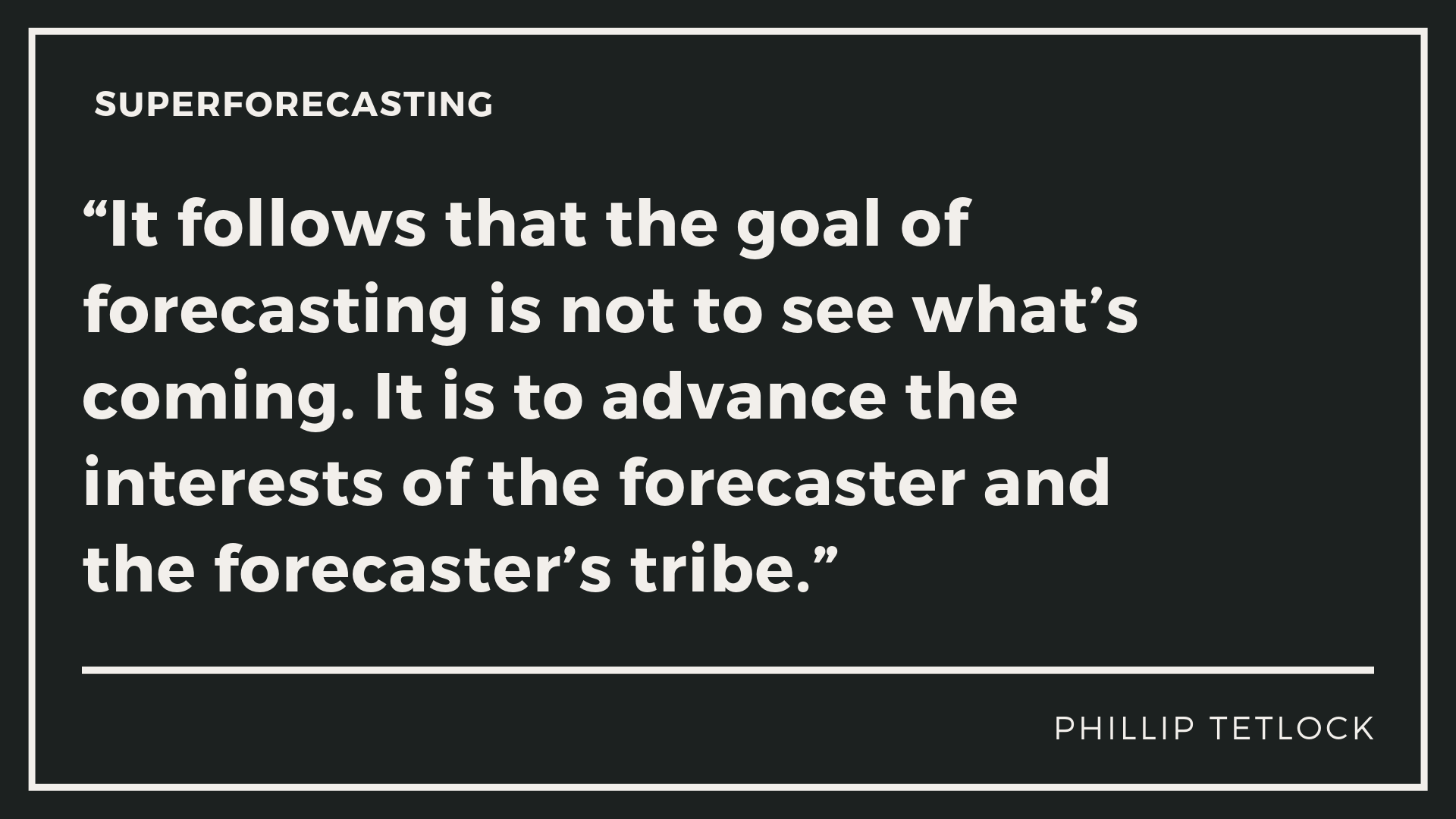
If you’ve read the book, Superforecasting by Phillip Tetlock, you’ll know that from the outside, making predictions on future outcomes, especially complex and dynamic ones, appears to be a hopeless task. How can anyone ever predict something like the stock market?
>
But, you’ll also know that there are people out there that somehow defy the seemingly insurmountable odds, even if by a fraction. Some would say that it’s luck. Others, “a small sample size.” A major theme from the book and these so called superforecasters, however, is you can actually improve forecasting – that there’s a skill to it. In that building out your own analytical model, iteratively and incrementally over time, you can get better at predicting the outcomes.
As it relates to player development, getting better at predicting performance outcomes will allow us to;
> Select players that better fit the program
> Identify the key factors that influence results,
> and update my predictions as the program runs to refine the process further.
There’s a ton of value in the exercise and a reason why analytics departments and positions matter. Even without the ability to develop your own complex mathematical or predictive model, Tetlock argues that the mere process of thinking more critically can enhance forecasting scores.
Stepping Back into the Box
In Superforecasting, Tetlock touches on a few keys steps that the best forecasters in the world go through when predicting an outcome. (notes in italics)
1. Break down the question into smaller components: Can performance gains be broken down into core components such as training consistency / commitment, genetics, previous training history, current and projected physical maturity? I believe so.
2. Identify the known and the unknown: Some on the knowns include a players previous history or training, estimate of number of sessions attended, motivation, dictating BDG’s energy & environment. Some unknowns – specific genetics (although bloodlines matter), what goes on outside of BDG (school, gym class, mandatory team training), players resilience to adversity, rate of adaptation / physiological maturity, non-specific stressors (school, sleep, etc).
3. Look closely at all of your assumptions: Consistency should be the biggest driver of performance outcomes. Prior history of training should influence ‘bigger gains’. Non-specific stressors play a significant role in limiting gains
4. Consider the outside view, and frame the problem not as a unique thing but as a variant of a wider phenomena: What are the key factors driving success in facilities outside of BDG?
5. Then look at what makes your problem unique and how your opinions are the same or different from others: Dealing with similar unknowns and uncontrollables, potentially slightly more because of players having obligations outside BDG.
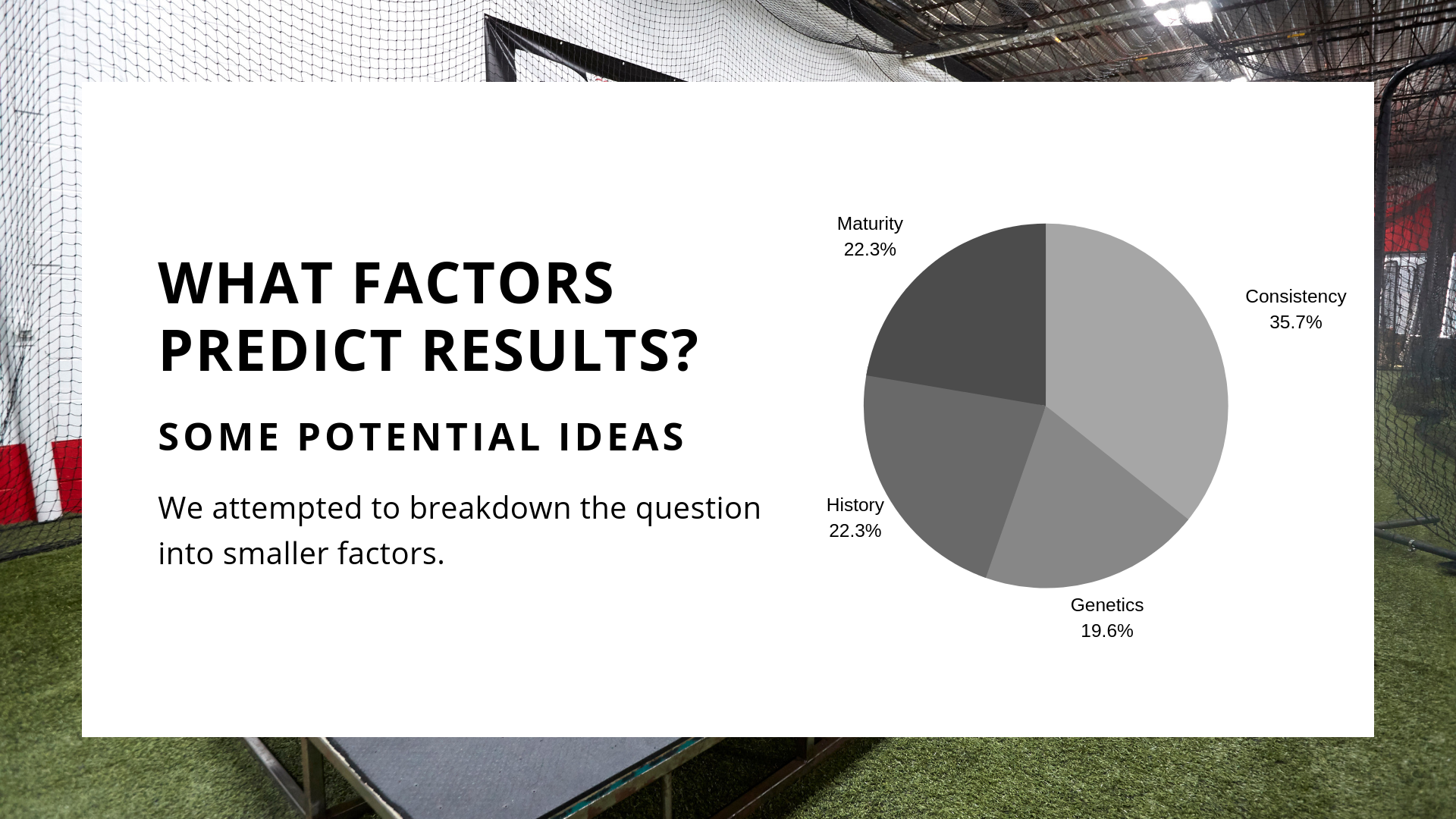
In sitting down with Tyler, we were surprised at how closely our predictions echoed. We were within a MPH or a couple pounds with about 80% of our guys. However, we were dramatically off in others – up to 5 MPH in some instances. Importantly, what came out of the conversation was a clearer understanding of what we individually valued, or ranked, regarding a players improvement. As an example, I held a players training consistency a bit lower. This proved to be a valuable perspective, helping us establish and refine our key prediction components.
Anecdotally: When we sat back and looked with a bird’s eye view, we couldn’t help but laugh at some of our numbers — they were outrageous. We were expecting everyone to gain quite a bit, have no setbacks, and even had a number of guys gaining upwards of 6-8 MPH in 6 months. I remember going through certain guys and thinking “yeah it seems ridiculous to conclude that, but I gotta believe that his work ethic and lack of training history will get him there”, only to laugh at how absurdly overconfident the statement was.
Midpoint Checkin
As the offseason progressed and players got a handle of the routines, the environment, and the program. The end of January marks a bit of a transition time for our players – in beginning to shift our priorities to the skill component of our program. Although we weren’t going to push for velocity numbers until March / April, some of our ‘smaller components’ began to surface. We got a handle on players work ethic, how they were adapting to training, weight and strength gain, consistency of showing up and putting out effort. We didn’t, however, check our forecasts.
Because this is also a bit of a recap, I want to share some of the key points that we found after review the first half of the offseason:
> Our players, by and large, came into the winter detrained. Almost all of our players had succumbed to the dreaded in-season detraining monster. They were underweight, weak, and not ready to handle a lot of stress. This is why we make our in-season training a priority – so you’re not starting from scratch every offseason.
> Sessions attended, training history, and our perceived rating of players effort seemed to correlate well to how much weight athletes gained. Shocking…right?
> Our general wellness data helped us gain considerable insight on what’s going on outside of our walls. When guys were trending downwards (outside their normal) for sleep, mood, or general soreness, we generally saw a decline in lifting performance and / or weight gain stagnation. More interestingly, we saw a decline in their ability to make movement changes.
> The athlete is the target. And the environment makes the athlete. Getting after it is contagious. Low energy is contagious. Cultivating the appropriate environment is paramount.
> Players want to know “why” more than ever. The BS meter for players, even high schoolers, is at an all time high as they are drinking from a firehose of information 24/7. With that said, the importance of trust is also at an all time high, and the ability to say “I don’t know” or tell an athlete “you might be right” is critical to developing it.
The Second Half
Although seeing guys gain strength and put on size is great, the second half of the off-season is what it’s all about. But it’s also the trickiest to manage. Things pickup on the throwing and hitting side, players perceive exams to be more stressful, they might be playing multiple sports or forced to run 10KM year end tests in gym class, and they’re training more frequently with their own teams (or even with high school baseball…yuck).
Within our walls, we’re pushing arms with intent work, trying to make movement changes stick on the mound, still pushing the load in the gym, and having to meticulously manage workload. To add to that, some players have to be ready for March Break games (and often miscommunicated expected pitch counts). This is the period of time where guys get tired, soreness or pain can creep in, and I spend much more time managing schedules more than anything else.
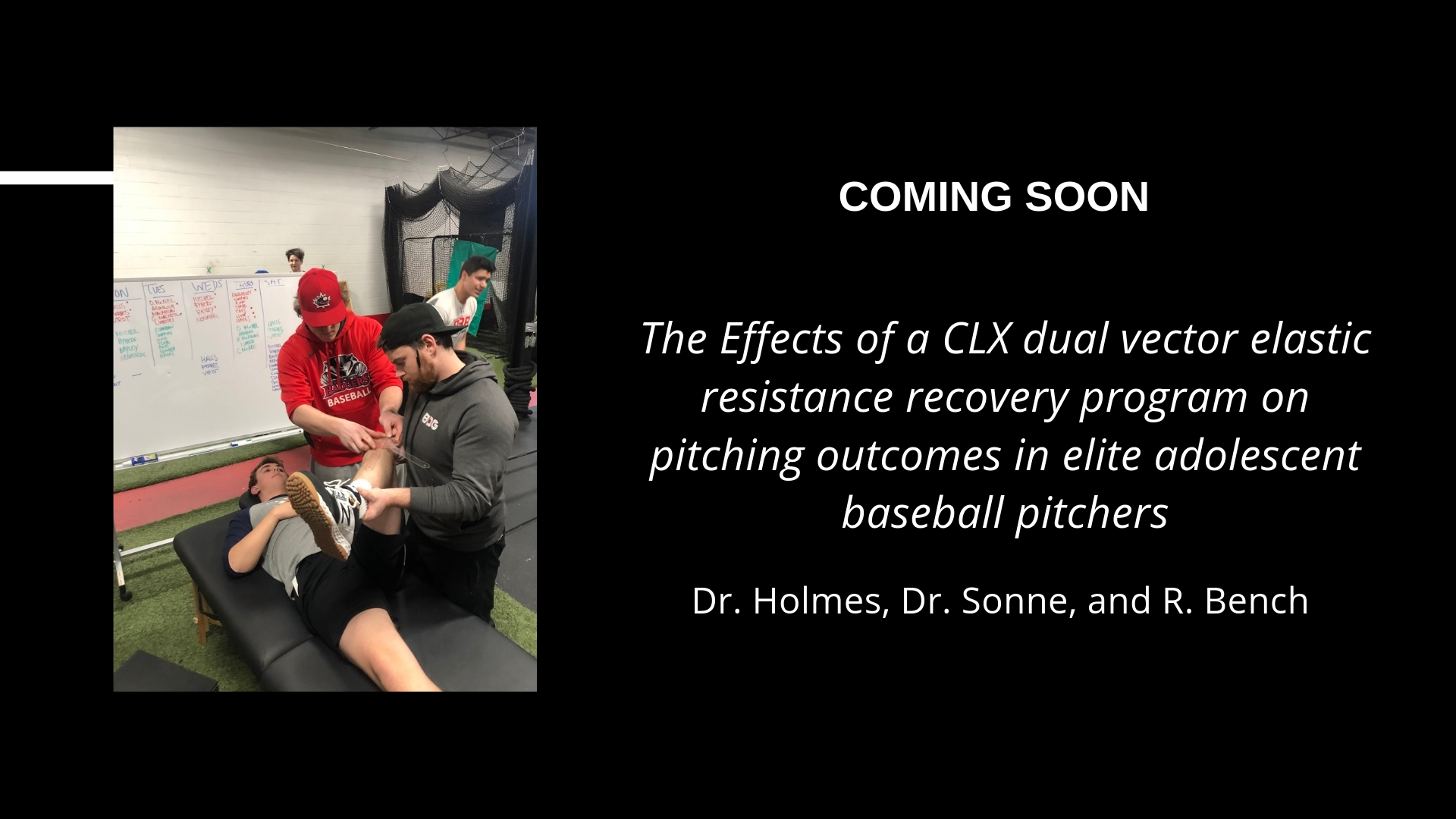
All the while, we ran our first research study with Dr. Mike Sonne, Dr. Mike Holmes and Ryan Bench on the effects of post throwing routines on performance and perceived recovery. Data collection isn’t always the smoothest process – and certain days were particularly trying.
Suffice to say, February through April is a challenging time.
But it’s also the most fun time. Personally, it’s all about problem solving and the problems are plentiful! Why are guys moving the way that they are? How can I influence their movement immediately with performance therapy? What patterns are we seeing with players and mechanics & what is working to solve them? How is our workload management holding up? If a player’s expected to throw and lift two times outside of BDG, how can I accommodate their schedule to ensure that progress continues? It’s the time of year where I’m not sleeping because I’m breaking down all of those aforementioned ‘smaller components’ to understand why a player is underperforming relative to my expectations. Or, in certain instances, why are they experiencing soreness?
For the players, it’s the time of year for them to bare the fruits of their labour. It’s PR time off the mound. It’s competition time with live at bats. It’s retesting time in the gym to see how much they’ve developed physically.
Here’s what our actual numbers looked like.
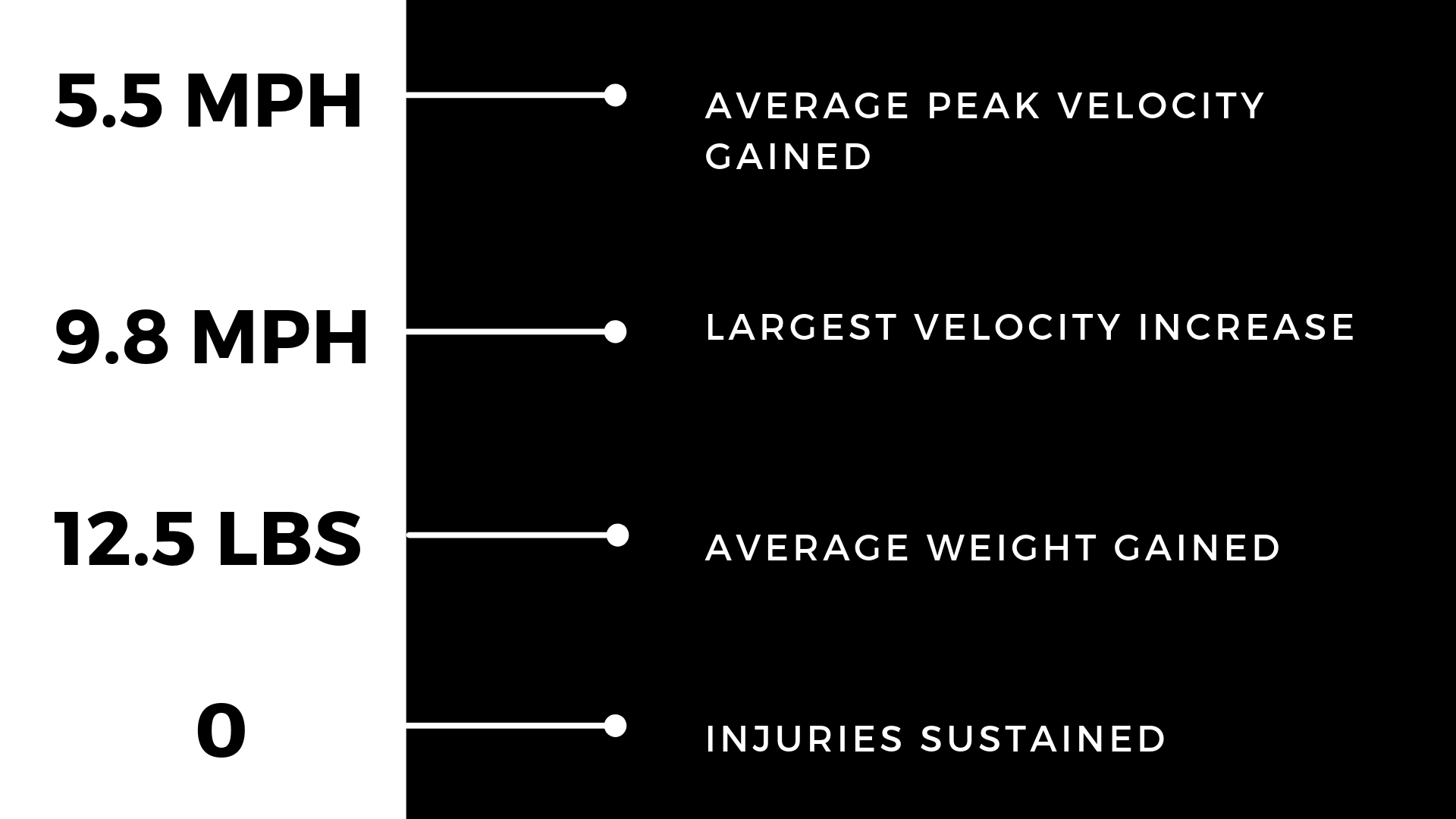
Broken down by player:
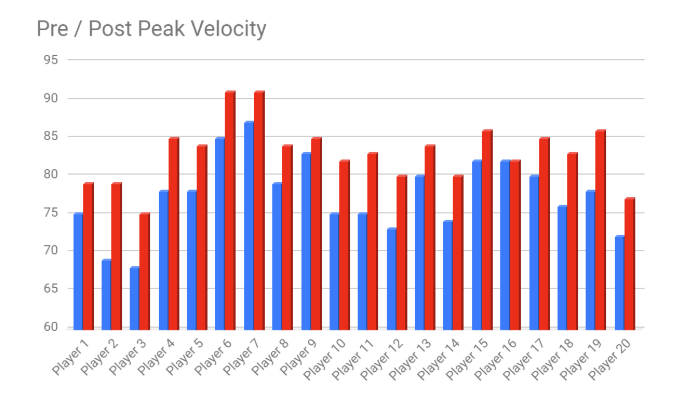
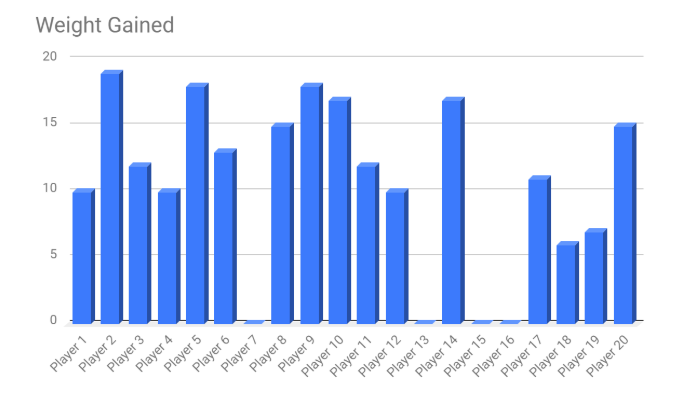
*** Players 7, 13, 16 incomplete data ***
It is also time for us to check out how our predictions went versus our actual results. Without giving all of the information away, are predicted results were remarkably close to our actual results.
In going back to and digesting our original predictions, and contemplating the program overall, a couple of things really stood out to us.
> We nailed a few of the big velocity gainers but completely missed the mark on others. There were guys that we scored high on the ‘smaller components’ that we deemed important who didn’t gain a bunch of velocity, and others that scored lower but still significantly gained. Not all of the boxes – consistency, weight / strength gained, training history – needed to be checked off for significant gains to occur.
> We found that players ‘peak’ velocity had a lot more to do with workload management than how they scored on our mechanical model. That is, when a lot of our guys were throwing the hardest, they were feeling the freshest but weren’t necessarily moving ‘the best.’ There’s a lot to unpack in this statement, from the validity of the mechanical model we used, to how much peak versus average velocity is important from a movement standpoint. It’s challenged us quite a bit — and something that we’re exploring as we speak.
> The conversation needs to be met at the players level of understanding. Sometimes we have a tendency to think that players know (or care) more than they actually do. We can get trapped into the habit of over explaining, overemphasizing, showing too much video, or making things too mechanical. Instead, I think that we need to shift towards being a bit more holistic and simplified in our teaching of young, developing players. More “try and get 7-8 hours of sleep tonight” and less “drive from your rear glute at this moment so that you generate later trunk torque”.
> We found that hip internal rotation (both hips) significantly increased in our population – something that came out of our research study and will be further addressed in future posts.
> The environment is everything and starts from the top. One of the best days of the year, where 3 PRs were smashed, all occurred when we the music blaring, 20+ guys, 5 instructors, and a few of the older guys all hanging around the cage screaming, making noise and firing it up for those that were pushing for velocity. It was a small tribe of people, from different teams, ages, abilities, and background uniting under a singular purpose. The place was electric. You could literally feel the energy enveloping you. In those 20 minutes, BDG’s culture was defined for everyone involved – it was a definitive moment for us.
> Alternatively, the opposite of that environment is contagious. If us as coaches aren’t focused, are personally stressed, or aren’t locked in on serving our players, the whole atmosphere goes out the window. Stu MacMillan, one of the premier track coaches in the world, talks about coaches needing a deload from time to time, to recoup and recover from the rigours of coaching. More emphasis needs to be placed on this in the future.
> The winter really cemented why an athlete-centered approach is the first key principle at Baseball Development Group, and we need to remind ourselves of that daily. As I stated in each of our exit interviews, our program exists to serve the athlete and their needs – their goals, desires, problems, and stories need to be heard. Personally, this was a winter where we devoted considerable amount of attention and time to one-on-one conversations about everything baseball (and non baseball) related. Understanding what drives these teenagers and their behaviours, and remaining cognizant that they are still teenagers, helped build trust and buy in. Without our athletes trust, we would have nothing.
In Summary
As a whole, our High Performance off-season program was a success. Our athletes got better, they learned about what it means to take care of their body, workload management and helped push our culture forward. We picked up valuable insight from our staff, players, and parents about what will make our program and model moving forward.
But, ultimately, it’s not just about the performance metrics increasing, that our forecasting ability is improving, or three letters on the sign at the front of our unit.
To quote myself from one of the exit interviews
“it’s about coming back to say Hi in 10 years, reminiscing about the stories and people from the time you were in here, and knowing that at the end of it all both you and BDG put everything on the line to keep you playing the game you love for as long as possible.”
We’re getting there.
weed vape cartridges online with fast delivery
This clarifies a lot of my confusion on the topic.
Great job on this comprehensive piece! Its informative, engaging, and packed with actionable tips that I can use right away.
Setting pre-program expectations for the kids seems like a decent way to stay accountable, even if the “superforecasting” stuff sounds a bit intense for high school ball. Honestly though, just seeing how the development model actually evolves over time is the real metric that matters.
been looking into this lately and this breakdown is pretty solid
curious to see how those mph predictions actually panned out.
tetlock is a solid reference here. predicting player dev is way harder than it looks once the season actually starts.
using superforecasting for youth baseball is a bit overkill, but probably better than just guessing.
Using Tetlock’s superforecasting approach for player gains is a smart move. Most coaches just wing it.
the superforecasting angle is actually pretty smart. most coaches just wing it without tracking their own accuracy
The prediction thing is a bold move. Curious to see how close those initial forecasts actually were to the year-end reviews.
Predicting the guys’ MPH just to be “right” feels like a low‑stakes Superforecasting experiment you’d pull from the book.
Predicting player stats in the middle of a 7 °C rainstorm sounds wild, but the Superforecasting reference actually gives it some credibility.
Love the Superforecasting reference, making baseline predictions is the only way to honestly evaluate if your training model is actually working.
Didn’t realize BDG was making predictions before the season too. Feels a little like high school sports psych experiments from the 90s. Also weird how they mention not being influenced by the predictions after admitting the whole tradition. Still, the reflections on iterating the program seem legit.
Predicting a guy’s MPH just to see if you were “right” feels straight out of that Superforecasting bit they mentioned. Good to see they’re actually using it instead of just bragging.
Okay, let me try to figure out how to approach this. The user wants a Reddit-style comment on the blog post “Winter High Performance Recap 2019”. The guidelines are to be casual, direct, maybe a bit opinionated, and keep it short—1-2 sentences max. No filler like “great article” or “thanks for sharing”. Need to reference something specific from the article.
First, I need to understand the article’s content. The author talks about the Ontario high school baseball season starting, BDG’s High Performance program, their year-end reviews, and mentions using Superforecasting by Philip Tetlock for making predictions. They also mention iterative improvements and feedback from players and parents.
So, I need to pick a specific point from the article. The part about using Superforecasting stands out. The author is into making predictions based on that book’s principles. A Reddit user might comment on that. Maybe question the practicality or relate it to their own experience.
Real Reddit users often have opinions and might not hold back. Maybe something like, “Using ‘Superforecasting’ to predict player growth seems…ambitious. ever actually track how accurate these predictions were? Just curious if all that planning actually translates to better performance or just feel-good metrics.” Wait, but the user said to reference something concrete from the article. The article mentions the predictions and the iterative process. Also, the author says they don’t bias their coaching.
Alternative angle: Maybe the mention of the weather at the start. Like, “It’s raining and 7°C, but you’re already thinking about baseball season? Insane.” But maybe that’s too trivial. The article also talks about individual reviews with players and parents. Maybe comment on that. “Year-end reviews with players and parents sound cool, but how do you measure ‘success’? Just asking since the article mentions iterating but doesn’t show results yet.”
Wait, the user wants to reference something concrete. The Superforecasting part is a good hook. Also, the author mentions they don’t bias their coaching. Maybe point out that if the predictions aren’t checked against results, it’s just guesswork. Or question if they actually track the predictions’ accuracy.
Another thought: The article says they do predictions not to be right but for the process. A Reddit user might be skeptical. Maybe: “Predictions for player growth without tracking accuracy? Sounds like planning without accountability. Where’s the follow-up data?” That’s a bit harsh but in line with Reddit’s direct style.
Or, “The ‘Superforecasting’ angle is interesting—do you actually measure how often your predictions hit? Just wondering if it’s more about the process than the results.” That’s two sentences, references the article’s content, and sounds conversational.
I should make sure to use contractions, keep it casual. Maybe: “Using Superforecasting for player predictions but not actually tracking if you’re right? Feels like a lot of guesswork. Ever compare forecasts to actual results?” That’s two sentences, references a specific part of the article, and is slightly opinionated.
Another option: “The part about doing predictions without biasing coaching is solid—hard to stay objective though, right? Curious how that actually plays out with real players.”
Hmm. The user wants the comment to be specific. The article also mentions the weather and the start of the season, but that might not be the core. Focus on the methodology they described. The key points are the predictions based on Superforecasting, the iterative model, and the feedback from reviews.
Probably best to go with the Superforecasting reference since that’s a unique part of the article. The first example I thought of: “Using ‘Superforecasting’ to predict player growth seems… ambitious. Ever actually track how accurate these predictions were? Just curious if all that planning translates to better performance or just feel-good metrics.” That’s two sentences, specific, and a bit opinionated.
Alternatively, shorter: “Superforecasting for player dev? Cool idea, but how do you measure if the predictions actually work?” That’s one sentence, specific.
The user example had a comment: “Coaches spending time on ‘iterative models’ but not mentioning if players actually improved? Where’s the proof?” That’s a good example.
So, similar style. Maybe: “Talk about iterative models and feedback, but the article never shows actual improvements from past years. Proof or it didn’t happen.” Wait, but the article is a recap, so maybe they didn’t mention results yet.
Alternatively, the user might point out the mention of the book. Maybe: “Reading ‘Superforecasting’ and not realizing predictions need verification? Sounds like a plan, not a strategy.”
Hmm. Need to make sure it’s from the article. The article says the coach makes predictions pre-program, not for being right, but for the process. The comment could question if that process leads to actual improvements.
Finalizing: “The ‘Superforecasting’ predictions are all well and good, but if you never check if you were right, how do you know it’s working? Just a bunch of vibes.” That’s two sentences, casual, references the article’s content directly.
Or shorter: “Dropping ‘Superforecasting’ but not tracking accuracy? Sounds like guesswork with a fancy label.” That’s one sentence, opinionated, specific.
Yes, that fits the requirements. Let’s go with that.
“Dropping ‘Superforecasting’ but not tracking accuracy? Sounds like guesswork with a fancy label.”
“Love that you’re open about your performance predictions, makes a lot of sense in retrospect. Always wondered how the winter program actually performed compared to your preseason predictions”
I dig the pre‑program predictions section—like a real Superforecasting test for the kids. Curiosity‑fueling to see how those numbers actually played out at the year‑end reviews.
Curious to see if those predictions actually panned out or if it’s just for show.
Superforecasting is a solid book, wonder if the predictions actually held up.
Big fan of Superforecasting. It’s cool to see those principles actually being applied to player development.
The prediction thing is a bold move. Hope it doesn’t put way too much unnecessary pressure on the kids.
I wonder how close those pre-program predictions actually were to the year-end results.
the superforecasting angle is interesting. definitely better than just guessing player progress.
Making performance predictions before the program even starts is a bold move. Reminds me a lot of that Tetlock book.
Making those predictions beforehand is a bold move. It’s way harder than just saying everyone improved at the end of the season.
making performance predictions before the season starts sounds like a pretty bold move. wonder how often they actually line up with the end results
curious to see how many of those performance predictions actually pan out
curious to see how close those pre-program predictions actually end up being
雨で気温も7度ほどという描写から、シーズン開幕直前の独特な空気が伝わってきました。半年間を振り返る選手・保護者との個別レビューが、技術面だけでなく成長や次の目標を考える良い機会になっていそうです。
The year-end reviews with players and parents sound like a valuable way to reflect on more than just performance results. I also like the contrast between the gloomy early-spring weather and the excitement of the Ontario high school baseball season finally getting underway.
It’s interesting to see how much preparation happens behind the scenes before the Ontario high school season even begins. The individual year-end reviews with players and parents sound especially valuable, since they can turn the lessons from six months in the High Performance program into clear goals for the upcoming season.
It’s interesting to look back at the program six months later, especially with the season now just hours away despite the cold, rainy weather. The individual year-end reviews with players and parents sound like a valuable way to reflect on development and set clear goals for the upcoming season.